

Outdoor dining areas tend to reveal their flaws at the exact moment dinner is ready. The table is in full sun. Someone has to squeeze around a chair every time they go back to the kitchen. The grill is close enough that smoke drifts across the food. By the time the evening cools down and everyone wants to linger, the patio is too dark to see what is left on the table.
A pergola can bring some order to all of that. For a Boulder backyard, it can give an outdoor table a more comfortable setting and establish a dining area that feels connected to the house without becoming another room to maintain.
The best place to start is dinner itself. Think through what happens from the moment food leaves the kitchen until everyone eventually gets up from the table.
Begin at the Kitchen Door
Outdoor dining involves a surprising amount of traffic between the table and the house. Plates come out. Someone forgets a serving spoon. Drinks need refilling. A dish goes back inside before dessert appears.
A beautiful dining area loses some of its charm when every trip requires navigating around a pergola post or weaving through chairs.
On many Boulder homes, the existing patio already sits outside a sliding or French door, which makes that door the natural beginning of the dining area. Leave a comfortable route from the threshold to the table and keep the busiest part of that path clear when chairs are occupied.
The distance from the kitchen matters too. A pergola positioned farther into the yard can create a wonderful destination, although hauling dinner across a long patio every night may gradually change how frequently the space gets used. Families who cook and eat outside several nights a week usually appreciate a fairly direct connection to the house. Boulder has a wide range of residential settings, from early neighborhoods filled with bungalows and other historic architecture to later planned communities.
The city itself categorizes its residential areas as established and planned neighborhoods, so backyard layouts and the relationship between house and patio can vary considerably across town. A pergola dining area works better when it responds to the particular house rather than following a standard distance from the back door.
Put the Table on Paper Before the Pergola
Pergola dimensions can sound generous until a dining table is sitting underneath them.
A six-person table occupies more space once everyone is seated. Chairs pull away from the tabletop, people walk behind them, and somebody usually wants to stand at one end talking after everyone else has sat down.
Measure the furniture in use rather than measuring the tabletop alone. Pull the chairs out as far as they normally go and walk behind them. If you are planning to replace the table later, masking tape on the patio can show the footprint of a larger one without buying anything first. The shape of the table can influence the structure too. A long rectangular table naturally follows the lines of many pergolas. Round tables create a different type of gathering because everyone faces toward the center, and they can work surprisingly well when the available patio is closer to square.
Once the dining area feels comfortable, the pergola can be sized around it. That order tends to produce a space that works at dinner rather than one where the furniture is forced to accommodate whatever dimensions were chosen for the structure.
Give the Grill Its Own Territory
The grill belongs close enough to the table that the cook stays part of the evening. It also produces heat, smoke and grease, so its relationship to the pergola deserves some thought.
A common arrangement places the grill near one side of the dining area, where food can move easily to the table while cooking stays outside the main seating zone. Larger patios can go farther by creating a cooking area beside the pergola with a counter or landing space between the grill and dining table.
This is one place where the pergola does not have to cover every inch of patio. The dining area may benefit from overhead definition while the grill remains beyond the structure.
Think about the person cooking as part of the group too. Facing a grill toward a fence leaves the cook staring away from everyone for much of the evening. Turning the cooking area slightly, when the layout allows, can make conversation easier and give the whole dinner a more social feel.
Make Room for the Hour After Dinner
Outdoor dining rarely ends when the plates are empty. Some of the nicest time around the table happens afterward, especially during a Boulder summer when the daylight stretches well into the evening.
Comfort starts to matter differently at that point.
Dining chairs that work perfectly for a meal may feel less inviting an hour later. If the pergola has enough room, a small seating area nearby can give people somewhere to move after dinner. On a tighter patio, comfortable dining chairs may be the better investment because they allow the table to serve both parts of the evening.
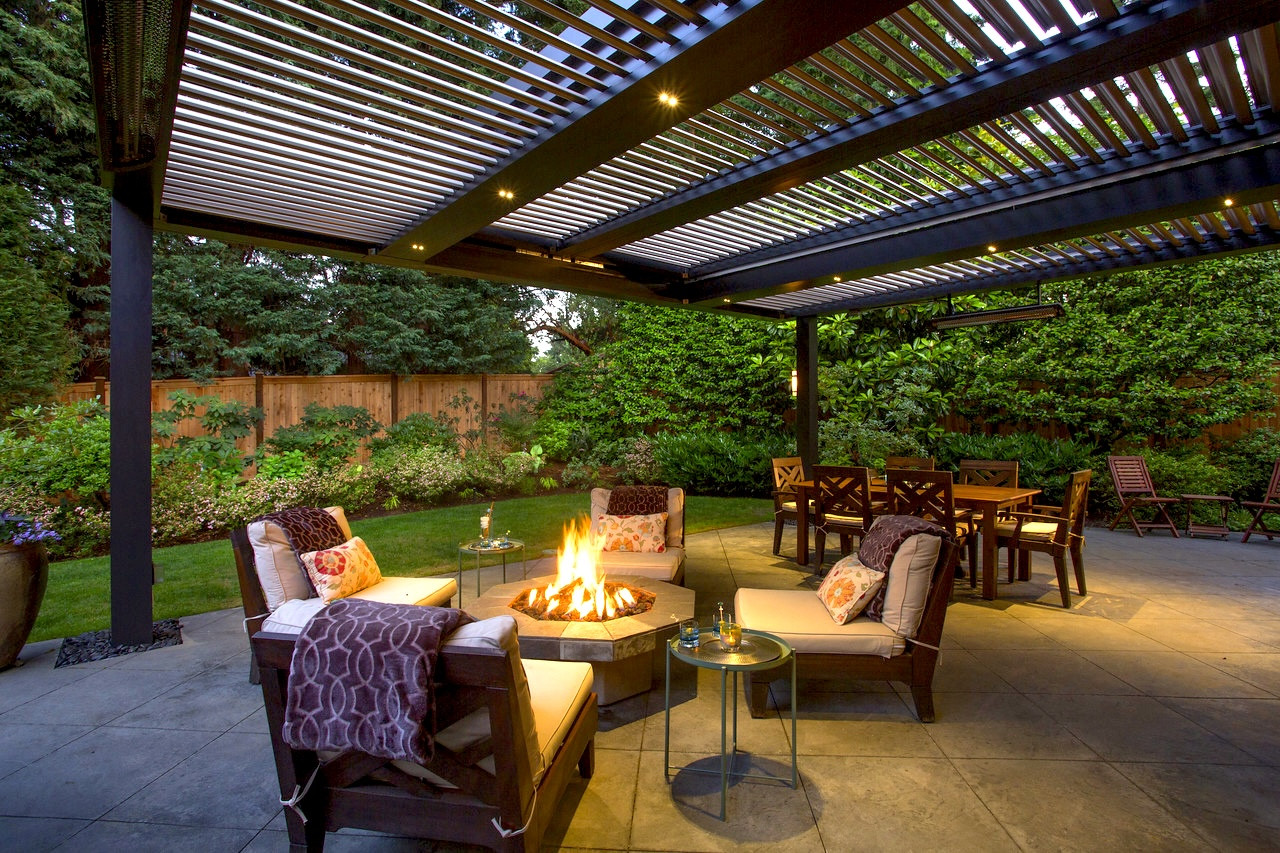
Lighting should support that slower pace. Fixtures integrated into pergola beams can put light directly over the table, while a dimmer allows the level to come down after the meal. A few lights farther into the yard add depth and keep the patio from feeling like a bright island surrounded by darkness.
The view from the table matters here as well. Boulder’s planning area includes a substantial amount of park and open-space land, and the city’s open-space program continues to preserve natural areas and connections throughout the community. Even on a typical residential lot, keeping some visual openness beyond the pergola can make an evening meal feel less enclosed.
A Dining Area Can Have Its Own Garden
Food and planting belong comfortably together.
Herbs near an outdoor dining space are useful, although they also contribute scent and texture when nobody is cooking with them. Pots of basil, thyme or rosemary can live close to the table during the warmer months. Larger beds around the pergola can carry the idea farther with flowering perennials and ornamental grasses that make the dining area feel established within the landscape.
Planting can also soften a part of the patio that feels exposed. A strategically placed shrub may give diners a little separation from a neighboring property while leaving the rest of the backyard open. On an older Boulder lot with mature trees, the pergola can settle into an existing canopy. Newer landscapes may need more time, so the planting plan can account for the size those trees and shrubs will eventually reach.
The result can feel especially good around a dining table because people experience the landscape at close range. Flowers sit only a few feet away. Grasses move beside the patio. The pergola gives the area architectural definition while the plants keep it from feeling overly constructed.
Plan for More Than July
Boulder’s patio season extends well beyond the hottest weeks of summer, and a dining pergola can accommodate some of those cooler evenings with a little forethought.
Sun exposure changes through the year, so the amount of overhead coverage deserves consideration if spring and fall meals are part of the plan. Lighting becomes more important as sunset arrives earlier. Electrical service planned during construction can also support future additions more cleanly than trying to run new wiring through a finished structure later.
Boulder also lists pergolas among the additions that require a building permit, so permitting belongs near the beginning of the project rather than the end. The city’s permitting materials call for plans that show existing and proposed structures, property dimensions, easements and utility locations. Those details can influence where the dining area ultimately fits on the property.
Design From Dinner Backward
A pergola dining area can look impressive when it is empty. The better test comes when six people are seated beneath it, someone is walking out with another plate, the grill is going, and nobody has to think much about how the space works.
For homeowners considering a pergola in Boulder, All Terrain Landscaping can plan the structure as part of the patio and surrounding landscape, with the way you actually eat and entertain guiding the layout. A good outdoor dining area eventually becomes familiar. You know which chair catches the evening breeze, where everyone puts the extra serving dishes, and which friends are likely to stay at the table long after dinner is over. A pergola can give those evenings a place that feels made for them.