

Lighting is a fundamental pillar of residential interior design. Beyond its basic practical utility, lighting dictates how human eyes perceive spatial volume, material textures, and color relationships within a room. Poorly planned lighting can make a spacious, well-decorated area feel cold, clinical, or uninviting, while a thoughtfully designed lighting scheme can elevate humble architectural layouts into warm, versatile sanctuaries.
Achieving optimal illumination requires moving past the concept of relying on a single overhead bulb per room. Every residential space demands a tailored combination of functional layers, appropriate color temperatures, and strategic fixture placements designed to support specific daily activities. Understanding how to select and balance these lighting elements allows you to optimize every room in your home for comfort, safety, and aesthetic harmony.
The Three Fundamental Layers of Home Lighting
A professional lighting scheme relies on the principle of layering. Combining different illumination sources eliminates harsh shadows, reduces glare, and grants complete control over the visual mood of a room.
Ambient Lighting
Ambient lighting serves as the primary base layer of illumination across a room. It provides uniform, general light that allows occupants to navigate spaces safely and comfortably.
-
Primary Sources: Recessed ceiling cans, flush mounts, semi-flush mounts, wide-distribution chandeliers, and large skylights.
-
Functional Role: Establishes the foundational brightness level, replacing missing sunlight during evening hours or overcast conditions.
-
Design Considerations: Ambient light should be diffused evenly across the floor plan to prevent stark contrasts between brightly lit centers and dark room perimeters.
Task Lighting
Task lighting provides focused, directional illumination targeted at specific work surfaces or activity zones. It eliminates shadows created by overhead ambient fixtures, allowing for detail-oriented tasks without eye strain.
-
Primary Sources: Under-cabinet LED strips, adjustable desk lamps, swing-arm reading sconces, kitchen island pendants, and vanity mirror lights.
-
Functional Role: Supports activities such as reading, food preparation, grooming, studying, and fine craftwork.
-
Design Considerations: Task fixtures should be positioned to project light directly onto the workspace without casting the user’s shadow over the target surface or creating direct glare into eyes.
Accent Lighting
Accent lighting adds depth, drama, and visual interest by drawing attention to specific architectural features, artwork, or decorative focal points. It operates at a higher intensity than surrounding ambient light to create visual contrast.
-
Primary Sources: Directional track lights, adjustable spot recessed lights, wall washers, picture lights, and LED cove strip lighting.
-
Functional Role: Highlights textured feature walls, framed artwork, open display shelving, fireplaces, and sculpture pieces.
-
Design Considerations: Effective accent lighting typically shines at a ratio three times brighter than the surrounding ambient baseline light level to establish a clear focal point.
Understanding Kelvin Ratings and Color Temperature
Selecting the correct light bulb involves more than simply checking wattage ratings. The Kelvin scale measures light color temperature, which dictates whether a room feels warm and relaxed or cool and energetic.
Warm white light ranging between 2700K and 3000K produces a soft, yellowish glow that mimics traditional incandescent bulbs, making it ideal for living rooms, dining spaces, and bedrooms where relaxation is paramount. Neutral white light between 3500K and 4000K offers crisp, clean illumination that aids concentration and accuracy, fitting perfectly in kitchens, home offices, and primary bathrooms. Daylight bulbs rated from 5000K to 6500K display a stark, cool blue tone best reserved for utility rooms, detailed workshops, and commercial spaces where high-precision visibility is mandatory.
Room-by-Room Lighting Strategies
Every living zone within a home serves distinct functional purposes throughout the day. Tailoring your lighting approach to each room’s specific demands ensures maximum utility and comfort.
Living Room Illumination
Living rooms are multi-functional gathering hubs used for entertaining, watching television, reading, and relaxing. Consequently, flexibility is key. Relying solely on centered ceiling cans creates flat, uninspiring shadows.
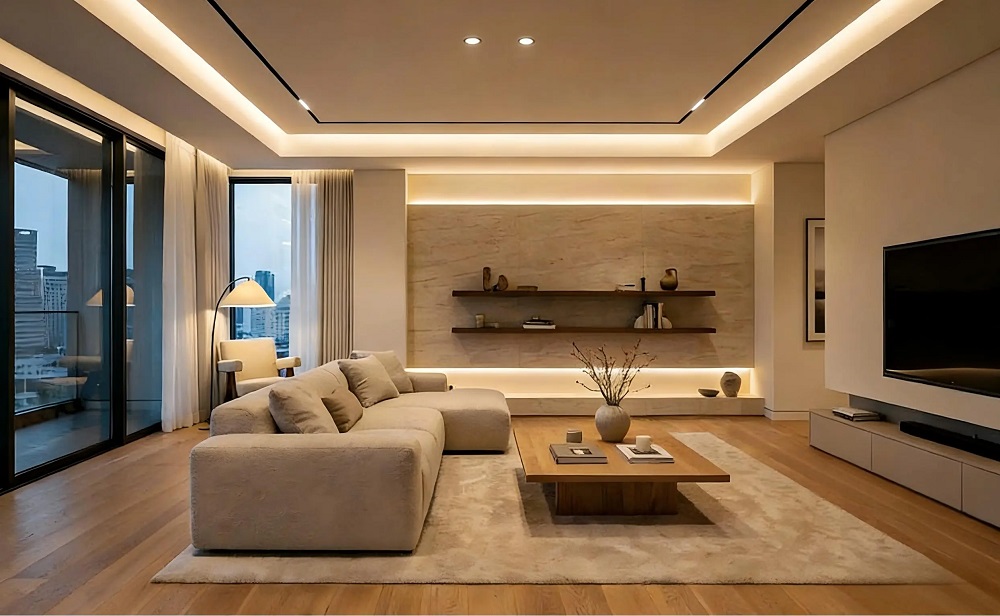
Instead, combine perimeter recessed ceiling lights or perimeter cove lighting for general ambient wash with floor lamps placed beside reading chairs. Position table lamps on end tables to soften mid-level transitions, and install directional spot lighting to highlight artwork or fireplace surrounds. Installing dimmer switches across all living room circuit lines lets you easily transition from bright social gatherings to dim movie nights.
Kitchen Lighting Mechanics
As the functional core of the home, the kitchen requires high-visibility task lighting combined with pleasant ambient diffusion. High-risk activities involving sharp knives and hot cooktops demand clear visibility.
-
Countertop Prep Zones: Install continuous under-cabinet LED tape lights or puck lights along the undersides of upper cabinets to illuminate the entire countertop depth directly.
-
Island Focal Points: Hang a series of decorative pendant lights centered over the kitchen island, placing them roughly 30 to 36 inches above the countertop surface.
-
General Circulation: Grid recessed ceiling cans across main walkways to eliminate dark spots between the island, refrigerator, and pantry areas.
Bedroom Comfort and Flexibility
Bedroom lighting should promote rest, circadian health, and evening relaxation. Avoid placing harsh downlighting directly over the head of the bed, as looking straight up into bright bulbs disrupts sleep preparation.
Incorporate soft ambient flush mounts or warm indirect ceiling coves. Mount adjustable wall sconces on either side of the bed frame at eye level when sitting up; this frees up nightstand surface space while providing targeted reading light that will not disturb a sleeping partner. Opt for warm bulbs rated strictly at 2700K to support natural melatonin production before sleep.
Bathroom Precision and Clarity
Inadequate bathroom lighting leads to unflattering shadows and frustrating grooming routines. A single overhead ceiling fixture directly above the mirror casts heavy, dark shadows under eyes, nose, and chin.
Mount vertical vanity light sconces on both sides of the bathroom mirror at eye level, roughly 60 to 65 inches from the floor, to achieve balanced face illumination. This side-by-side placement casts even light across the face, eliminating harsh shadows for shaving and makeup application. Supplement vanity lights with water-rated, sealed recessed downlights directly over shower stalls and bathtub enclosures.
Home Office Productivity
Effective office lighting prevents eye fatigue, headaches, and drowsiness during long work hours. Avoid relying solely on a computer screen in a dark room, as extreme contrast forces eyes to strain continuously.
Position the primary workstation near natural light sources, but angle the desk perpendicular to windows to prevent direct solar glare across monitor screens. Add an adjustable swing-arm task lamp beside the monitor to illuminate paperwork directly. Ensure ambient room lighting remains bright and neutral (3500K to 4000K) to maintain mental alertness throughout the workday.
Advanced Control Systems and Smart Integration
Modern home improvement extends into digital control interfaces. Upgrading standard toggle wall switches to modern control infrastructure enhances energy efficiency and convenience.
Installing digital dimmer switches across every room allows you to adjust light levels based on changing natural sunlight throughout the day. Smart lighting systems take this further, letting homeowners program custom scenes, automate lighting schedules based on local sunset times, and adjust color temperatures dynamically from cool morning light to warm evening hues.
Frequently Asked Questions
What is the ideal height for hanging pendant lights over a kitchen island?
Pendant lights should generally hang between 30 and 36 inches above the surface of the kitchen island, measured from the countertop to the bottom edge of the light fixture shade. If your home features tall ceilings exceeding eight feet, raise the pendants by roughly three inches for every additional foot of ceiling height. Maintain a distance of 24 to 30 inches between individual pendant fixtures to ensure even light distribution without visual crowding.
How do lumens differ from watts when choosing energy-efficient LED bulbs?
Watts measure electrical power consumption, whereas lumens measure the actual volume of visible light produced by a bulb. Traditional incandescent bulbs were rated by wattage, but modern energy-efficient LED bulbs produce equal or higher light output using far less electrical wattage. When shopping for replacement bulbs, focus on the lumen rating to determine brightness: a standard 60-watt incandescent bulb corresponds to an LED bulb producing approximately 800 lumens using only 8 to 10 watts.
How do I prevent glare on my television screen or computer monitor?
To prevent distracting glare, avoid placing light fixtures directly opposite digital screens or positioning monitors straight across from unshaded windows. Use diffuse light fixtures with frosted glass shades rather than exposed clear glass bulbs. Additionally, installing adjustable window blinds, placing task lamps to the side of screens rather than behind or directly above them, and utilizing low-glare LED tape lighting behind the television screen helps balance background brightness.
Can I mix different color temperatures within the same room?
While combining widely conflicting color temperatures—such as pairing a cool 5000K bulb with a deep warm 2700K bulb in the same fixture—creates visual dissonance, subtle layering within a 5000-Kelvin span is acceptable for specific functional zones. For example, in an open-concept kitchen, you might use 3500K task lighting over the active counter workspace while maintaining 3000K ambient pendants over an adjacent casual eating nook, provided the fixtures operate on independent light switches.
How do I calculate how many lumens a room requires?
To estimate total lumen requirements, multiply the square footage of the room by the recommended foot-candle baseline for that specific space type. General living rooms and bedrooms typically require 10 to 20 lumens per square foot. High-task areas like kitchens, bathrooms, and home offices require 70 to 80 lumens per square foot. For a 200-square-foot kitchen, multiply 200 by 70 to arrive at a target baseline of roughly 14,000 total lumens distributed across all lighting layers.
What is Color Rendering Index (CRI), and why does it matter for home interiors?
The Color Rendering Index measures how accurately a light source reveals the true colors of physical objects, materials, and human skin tones compared to natural daylight, on a scale from 0 to 100. Low CRI bulbs can make vibrant fabrics look dull, skin tones appear sickly, and wall paint look muddy. For residential interiors, select LED bulbs with a CRI rating of 90 or higher to ensure natural color accuracy and rich visual depth across furniture and decor.
What lighting options work best for small rooms with low ceilings?
For rooms with low ceilings measuring eight feet or under, avoid long, hanging chandeliers or deep pendants that obstruct sightlines and create physical collision hazards. Instead, opt for sleek, low-profile flush mounts, semi-flush mounts, or shallow recessed ceiling cans. Using wall sconces that cast light upward against the ceiling reflects light back down, creating an optical illusion that makes low ceilings feel noticeably higher and more expansive.